

County and Municipal Codification Services: Choosing the Right Fit
- Home
- >
- City Ordinance
- >
- County and Municipal Codification Services: Choosing the Right Fit
Key Points
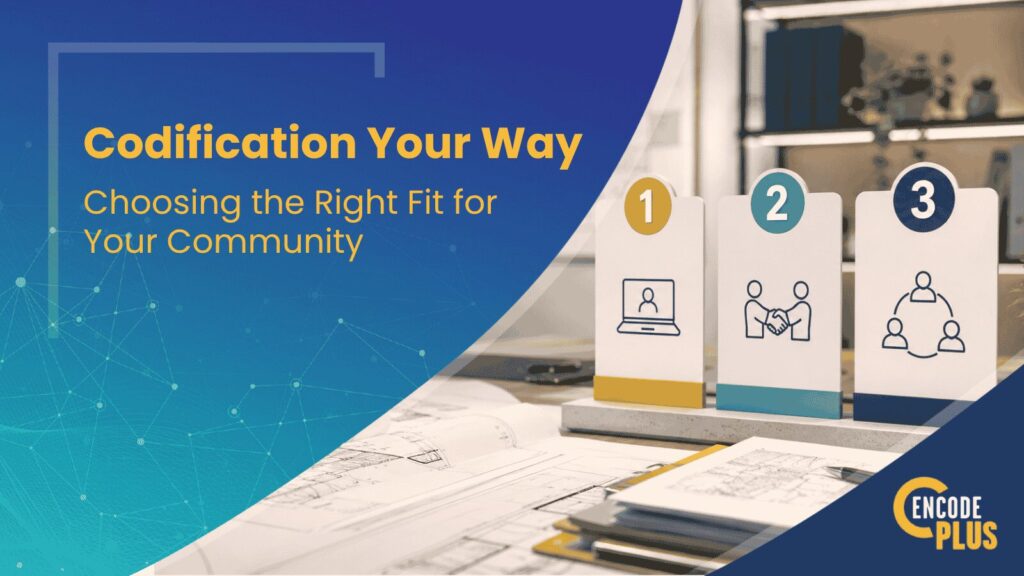
- There's no universal approach to codification. The right model depends on your organization's size, internal capacity, and how hands-on your team wants to be. All three options are equally valid depending on the context.
- The right technology is foundational to success. Organizations that manage any part of their codification in-house need a platform that supports real problem-solving and workflows. Without it, the workload quickly becomes unmanageable, regardless of staff experience.
- Needs evolve, and your approach should too. Whether an organization starts fully independent and eventually needs outside support or begins with full outside management and gradually builds internal capacity, the most sustainable codification strategy is one that can flex as circumstances change.
Managing municipal codes is no small task. Whether you’re a city clerk balancing a dozen competing priorities, a legal team navigating a wave of regulatory updates, or an evolving municipality rebuilding your code from scratch, the process demands time, precision, and consistency. The good news? There’s more than one way to approach it.
Stay informed about emerging technology for local governments.
and be the first to know!
When You Want to Stay in Control: The Self-Service Approach
Some municipalities prefer to own the codification process from the inside out. Teams with dedicated legal staff, established workflows, or a strong preference for hands-on management often find that a self-service approach works best. With the right platform and tools in place, experienced city attorneys, in-house counsel, and capable administrative teams can manage their code efficiently without outsourcing the work. The key to managing this process is having professional-grade technology that makes the work manageable rather than overwhelming.
Without the right system to help simplify amendments and automate history tables, even the most experienced staff can get bogged down in version control issues, formatting inconsistencies, and keeping public-facing code up to date. A well-designed platform removes friction points from self-codification, freeing internal teams to focus on the substantive work of reviewing and updating code rather than wrestling with the mechanics of how it’s organized and delivered.
How this can look in practice: Fairfax County, VA uses a self-managed approach. Staff make text edits directly in enCodePlus, then record amendment details such as the amendment number, title, adoption date, effective date, and description. They can also upload the adopted amendment and related materials, such as staff reports, before publishing the update.
This model works well when a community wants direct control over code maintenance and has the internal capacity to manage updates consistently.
When Outside Expertise Makes More Sense: The Full-Service Approach
For other organizations, a strategic move could be to hand the work over to specialists. Smaller municipalities with limited administrative bandwidth, jurisdictions undertaking a major recodification effort, or teams navigating complex structural changes often benefit from this fully managed approach. Rather than stretching internal resources thin, this approach allows them to rely on experienced codification professionals to handle organization, formatting, updates, and ongoing maintenance— freeing staff to focus elsewhere.
A fully managed approach also brings an added level of institutional knowledge that’s often difficult to replicate internally. Expert codification professionals have seen the same structural problems across dozens of jurisdictions, which means fewer errors and faster turnaround. For many organizations, the value added isn’t just getting the work done; it’s getting it done right without adding strain on internal members.
How this can look in practice: Basehor, KS uses a full-service approach. The local team sends adopted ordinances and resolutions to enCodePlus staff, who make the text edits, record the ordinance or resolution details, upload the adopted document, and publish the update.
This model can be useful for communities that want to keep their code current without asking internal staff to manage each technical step of the codification process.
When You Need Something In-Between: The Hybrid Approach
It’s also true that some communities don’t fall neatly into either category. In these cases, a hybrid approach lets teams customize how much they take on versus delegate. Some departments may be equipped to manage routine updates while leaning on outside support for larger projects or technical formatting. This kind of flexibility is especially useful for organizations in transition, whether that means growing internal capacity, managing staff turnover, or simply figuring out what works best over time.
Needs are always changing. An organization that starts with full-service codification support may gradually build the internal capacity to take on more. On the other hand, a team that has managed their code independently for years may hit a point— a major recodification, a staffing gap, a surge in legislative activity, where outside help becomes the necessary choice. A hybrid model accommodates that kind of natural evolution without requiring a wholesale change in approach every time circumstances shift.
How this can look in practice: Littleton, CO uses a hybrid approach. The city drafts amendments to its Unified Land Use Code in enCodePlus using Track Changes and makes those drafts available for public review. Once an ordinance is adopted, Littleton sends it to enCodePlus staff, who finalize the redline edits, record the ordinance details, upload the adopted ordinance, and publish the update.
This model allows the local team to stay closely involved in drafting and public review while relying on outside support for final codification and publication.
The Wrap Up
The best codification service is the one that best fits your community’s size, capacity, workflow, and goals. The most effective approach is sustainable, accurate, and realistic about how your organization actually operates.
A self-service model can work well for communities with the staff, experience, and internal process to manage updates directly. A full-service model can be the better fit when staff time is limited or when the work requires more technical support. A hybrid model gives communities room to divide the work in a way that reflects how they actually operate.
Flexibility and scalability are key. Codification needs change over time. Staff capacity shifts. Ordinance activity rises and falls. Communities move through major code updates, clean-up projects, leadership changes, and public-facing modernization efforts. The ideal codification approach is the one that can adapt without compromising accuracy, transparency, or public access.
enCodePlus supports self-service, full-service, and hybrid codification models, so communities can choose the level of control and support that fits their needs.
To learn more, email us at codify@encodplus.com or schedule a conversation with our team.
About enCodePlus – Intelligent Planning, Zoning and Codification Software
enCodePlus is a unique, web-based technology platform delivering a full suite of planning, zoning and municipal code tools and features, together with full or hybrid code management services. Created by the planning experts at Kendig Keast Collaborative, the platform serves planners and zoning administrators, clerks, attorneys, managers, economic developers, and consultant partners. The cutting-edge software streamlines the rejuvenation of the format and usefulness of plans, studies, codes and ordinances, design guidelines, standards and specifications and the processes to create and publish them.
Frequently Asked Questions
Below, we’ve compiled answers to some common inquiries about codification.
How do I know which service model is right for my organization?
It largely comes down to your internal capacity and how involved you want to be in the process. Organizations with dedicated legal or administrative staff often do well with a self-service approach, while those with limited bandwidth or undergoing major recodification efforts tend to benefit from full outside support. If you’re unsure, a hybrid model is a practical starting point that can be adjusted over time.
We use a vendor to handle our codification. How difficult is it to transition to a self-service or hybrid model?
The transition is more manageable than most organizations expect, especially if your existing code is already well-structured. The biggest adjustment is typically internal; establishing who owns the process, building familiarity with the platform, and developing a workflow for how updates get reviewed and submitted.
We handle codification internally. What would we gain from bringing in outside help?
The most immediate benefit is usually time and bandwidth. Outside expertise also brings a broader perspective, having worked across many jurisdictions, which can surface structural issues or organizational approaches your team may not have encountered before.
Our staff knows our code better than anyone. How do we maintain that institutional knowledge if we hand some of the work off?
This is a legitimate concern and one of the reasons a hybrid model appeals to organizations in this position. Rather than transferring full ownership, a hybrid approach lets your team stay closely involved in the work they know best while delegating the more time-consuming or technical aspects.
⚡Get a Quick Quote!⚡
We can turn around a quick codification or project quote with just a few details from you.